



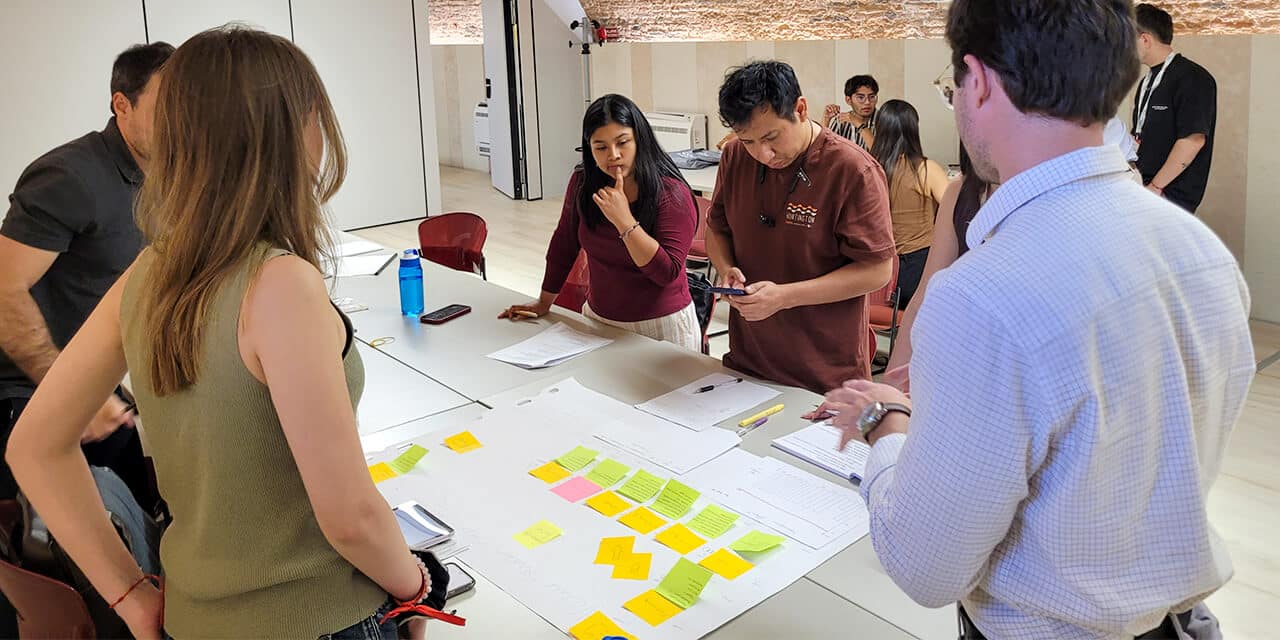
What is project management
Project management is the application of knowledge, methods, and tools to plan, execute, and complete an initiative with defined objectives. A project has a beginning and an end, and it exists to deliver something specific: a product, service, process, event, or organizational transformation.
The Project Management Institute (PMI), the leading international reference in the field, defines a project as “a temporary endeavor undertaken to create a unique product, service, or result.” That temporary nature is what sets it apart from ongoing operations: a company’s day-to-day customer service is part of its operations, whereas rolling out a new service platform can be organized as a project.
Managing a project means defining the expected outcome, distributing responsibilities, organizing deadlines, tracking costs, managing risks, and making sure everyone involved understands what needs to be delivered.
Management also has to account for quality and the value created. Delivering on time matters, but a project can only be considered successful when the result meets the need that justified creating it in the first place.
How project management works in practice
Although each organization adopts its own processes, project management usually involves five main phases:
- Initiation — the point of understanding the problem, defining the objective, and assessing whether the project is viable. This phase also identifies the key stakeholders and the expected outcomes.
- Planning — turns the objective into a path to execution. Scope, activities, owners, resources, budget, schedule, risks, and communication channels are all defined here.
- Execution — the team carries out the planned work. The project lead tracks activities, keeps everyone aligned, removes obstacles, and ensures information flows among those involved.
- Monitoring and control — runs throughout execution. Indicators, deadlines, costs, and risks are tracked to spot deviations and allow adjustments before problems grow.
- Closing — formalizes the delivery, records lessons learned, and evaluates results. This phase helps the organization draw on the experience for future projects.
In practice, these phases don’t always unfold in a fully linear way. Projects may call for revisions, testing cycles, and decisions along the way.
What project management methodologies exist
There are different ways to structure project management. The choice depends on the type of deliverable, the level of uncertainty, and the organization’s culture.
Predictive methodologies (waterfall)
In predictive approaches — also known as waterfall — the project is planned in detail before execution, and the phases follow a defined sequence. This model can be a good fit when the scope is known and changes need to be controlled more tightly, as in engineering works, regulatory projects, or implementations with fixed requirements.
Much of the practice associated with this model is systematized in the PMBOK Guide, published by PMI, which organizes processes, knowledge areas, and good practices in project management.
Agile methodologies (Scrum and Kanban)
In agile approaches, the work is divided into smaller cycles. The team delivers parts of the solution, gathers feedback, and adjusts the next steps. This logic is common in environments where needs may evolve over the course of the project.
Scrum is one of the most widely used frameworks: it organizes work into sprints, short cycles at the end of which the team delivers something functional and reviews what it will tackle next. Kanban, in turn, works by visualizing the flow of tasks on a board, limiting the number of activities in progress to avoid bottlenecks.
Hybrid models
Hybrid models combine structured planning with cycles of development and adaptation. They are common in organizations that need predictability of budget and schedule but work with deliverables subject to change.
No single methodology solves every type of project. The most important skill is understanding the context and choosing a way of working that fits the objective, the risks, and the people involved.
What tools support project management
Tools don’t replace method, but they help keep information organized and visible to the whole team. Solutions like Trello, Asana, Jira, Monday, and Microsoft Project make it possible to assign tasks, track deadlines, view the schedule on a Gantt chart, and record decisions in one place.
For smaller teams, spreadsheets and simple boards may be enough. The choice should take into account the size of the project, the number of people involved, and the level of control needed. Too many tools, with no defined process, tend to generate more record-keeping than clarity.
What skills matter in project management
Project management brings together technical, organizational, and behavioral competencies:
- Planning — turning broad objectives into clear activities, priorities, deadlines, and responsibilities.
- Organization — keeping track of information, documents, decisions, and dependencies across different parts of the project.
- Communication — much of what goes wrong stems from misaligned expectations. The project lead needs to explain objectives, record decisions, run meetings, and tailor information for different audiences.
- Leadership — even without formal authority over everyone involved, the manager needs to set direction, encourage collaboration, and keep the team connected to the result.
- Risk management — identifying what could go wrong before it does and defining possible responses.
- Negotiation and problem-solving — reconciling competing interests and clearing obstacles throughout execution.
- Financial control and decision-making — tracking the budget and choosing among alternatives with incomplete information.
- Emotional intelligence — projects involve pressure, change, and competing interests. Knowing how to manage conflict and keep conversations productive helps preserve the quality of the work.
Why companies value project management
A large share of organizational change happens through projects. New products, expansions, restructurings, innovations, and technology rollouts all need to be organized to move from planning into practice.
When management is effective, the company makes better use of its resources, identifies risks early, and reduces rework. Teams also gain clarity on priorities, responsibilities, and criteria for success.
Project management helps connect strategy and execution. It turns corporate objectives into concrete deliverables and lets leaders track how initiatives progress.
This competency becomes even more relevant in environments with multiple projects running at the same time. Without criteria for prioritization and governance, different initiatives can compete for the same resources and drift away from the needs of the business. That’s why many organizations set up a PMO, or project management office, responsible for standardizing methods, consolidating information, and supporting prioritization decisions.
For that reason, professionals who can combine strategic vision, organization, and leadership tend to be valued across sectors, and they appear frequently among the skills most valued by global companies.
Is project management only for those in a management role?
No. Even people without the title of project manager can use this knowledge in their work.
An analyst may need to organize an internal improvement. A marketing professional may coordinate a campaign. Someone in human resources may lead the rollout of a development program. An entrepreneur may plan the launch of a service.
In these situations, understanding scope, deadlines, risks, and responsibilities helps reduce improvisation and improve the quality of what’s delivered.
For those looking to take on leadership positions, this experience is also relevant. Leading projects is a way to demonstrate coordination, communication, decision-making, and the ability to produce results.
The knowledge can be built gradually, starting with smaller initiatives and moving toward projects with more people, resources, and strategic impact.
What is the role of the project manager
The project manager, or project lead, serves as the connecting point between the initiative’s objectives, the team responsible for execution, and the stakeholders with an interest in the result.
Their role isn’t to carry out every activity personally, but to create the conditions for the work to be done with clarity and coordination.
That means setting priorities, facilitating decisions, tracking commitments, managing changes, and communicating the project’s progress. It also means identifying roadblocks and finding solutions before they compromise the delivery.
A good leader doesn’t just chase deadlines. They work to understand the team’s difficulties, foster collaboration, and keep decisions connected to the project’s purpose.
In international settings, this role calls for extra attention to cultural differences, time zones, communication styles, and ways of making decisions.
How to tell whether a project was successful
Deadline and budget are important indicators, but they aren’t enough to assess every outcome.
A project can be delivered on time and still fail to solve the problem it was created for. Likewise, justified changes may raise the investment and produce a result that’s more relevant to the organization.
The assessment should consider whether the objectives were met, the quality of the delivery, the satisfaction of the audiences involved, and the value created for the business.
It’s also important to look at adoption of the solution. A new system, for example, only produces results when people are able to fold it into their routine.
Recording lessons, wins, and difficulties allows the company to improve its ability to execute. That knowledge turns every project into a source of development for future initiatives.
How to develop project management skills
Learning can start with active participation in projects within your own area. Watching how objectives are defined, how decisions are recorded, and how risks are handled helps you understand the dynamics of the work.
Studying fundamentals, methodologies, and tools broadens that repertoire. Courses, books, case studies, and certifications can organize knowledge that a professional already applies intuitively. Among the most recognized certifications are the PMP and CAPM, from PMI, and the Scrum Master certifications offered by organizations such as Scrum Alliance and Scrum.org.
Another important practice is asking for feedback. Team members, leaders, and internal clients can point to areas for improvement in planning, communication, and follow-through.
Taking on progressively more complex projects turns knowledge into experience. Professionals can also keep a record of the results they’ve achieved, demonstrating their ability to lead initiatives.
International training adds exposure to different management practices, business environments, and ways of collaborating. Programs like Advanced Topics in Project Management, at the University of La Verne, combine PMBOK fundamentals and agile methodologies with hands-on application in planning, execution, and performance control.
How artificial intelligence is changing project management
Artificial intelligence tools already support activities that once took up much of a manager’s time: consolidating status updates, summarizing meetings, reviewing schedules, flagging overdue tasks, and signaling risks based on the history of past projects.
The rise of AI agents and their impact on global careers has accelerated this shift. It doesn’t eliminate the project manager’s role. On the contrary, it tends to move their attention toward what automation doesn’t resolve: negotiating priorities, interpreting context, making decisions with incomplete information, and sustaining the relationship with the people involved.
For professionals, the practical implication is twofold. It’s worth keeping up with how these tools fit into the work while also investing in the competencies of judgment, communication, and leadership, which remain the human differentiator in leading projects.
How international training broadens your view of projects
Projects carried out in international settings can involve distributed teams, different organizational cultures, and varying expectations around communication, deadlines, and leadership.
Studying the subject in another country makes it possible to discuss these challenges with professors and peers who bring varied experiences. Case studies and collaborative activities help compare approaches and understand how project decisions are made in other contexts.
Beyond the technical content, the experience of studying abroad itself develops adaptability, autonomy, communication, and the ability to work with people from different backgrounds.
IBS Americas’ international programs include training opportunities related to management, leadership, strategy, projects, and governance. For professionals looking to expand their ability to execute, an international academic experience can combine up-to-date knowledge with the development of a global outlook.